It seems we have some sort of "in-thing" movements in our little world of ascorbate developers.
All of a sudden there is an explosion of posts about the latest *thing*, and all of a sudden everyone agrees that we have the Solution........
For a long time noone paid much attention to fog, most people was amazed over the fact that Caffenol worked at all, and people overlooked the fact that underdeveloped images without contrast was not such a great achievement, & preferred to talk about artistic values instead.....
When ascorbic acid was introduced, and especially Reinhold's improved, more concentrated formula was introduced, we had a developer every bit as good as commercial products, and pretty son fog levels and developer fog was a theme.
KBr of potassium bromide was quickly introduced as a solution. KBr is indeed the classical restrainer & anti-foggant in photograpic developer formulae.
I wrote a little about cirtic acid as an alternative :
http://ascorbate-developers.blogspot.com/2011/03/citric-acid-as-replacement-for-kbr-look.html
Citric acid is said to work as an anti-foggant solely by lowering the pH levels, a look at this article will raise some suspicion over that, my puublished calculations show very little effect on the total pH in the mix (except for low concentration CC-L), and since citric acid works very well as an anti-foggant at roughly double the weight added compared to KBr, I personally think the action from citric acid is a little more involved than some quarters think.
KBr on the other hand seems to work quite straightforward : in solution KBr is dissociated into K+ and Br- ions. In the film emulsion we have silver HALIDES, that is silver salts from bromide, iodide and chloride (fluoride is generally not used, since it is very active). In modern times silver bromide is used more thjan the others, because it is more sensitive to light, originally silver chloride was used, and that is much less light sensitive.
Now during development silver ions, Ag+ is redusced to metallic silvers and deposited in the emulsion as silver grains (clumped together), while Br- is released into solution.
Generally speaking, if Br- is then added to the solution via KBr, the Br- ions from this addendum will tend to keep the red-ox reactin in check, and slow down development.
Lately replacing KBr with ordinary table salt has been discussed a lot. Lately a lot has been written about IODIZED table aslt as a replacement for KBr. Pictures have been shown, thast seems to prove that this works. And fairly unsubstantiated claims that the very very small convcentration of KI, potassioum iodide is why this seems to work.
Frankly speaking I remain somewhat sceptical about that.
First because there is relatively little AgI, solver iodide, in modern emulsions, so any addition of I- ions is likely not to work directly, like KBr have been proven to do by the whole industry.
Second because the amount of iodides is so small in table salt, compared to chlorides, that the effect thereof is likely to drown, straight KBr works directly and at a much higher concentration.
But judging from the pictures table salt seems to work, and why?
Well there are fly's in the ointment : one worker has reported a severe case of fogging or staining from the salt addition. This "salt effect" is most likely connected with the heavy dose used - at least 10 times the weight, compared to KBr, and probably has to do with the same effect as adding salt to food, a heavily salted ham changes it substantially, compared to fresh food....
That table salt seem to work, is beyond question, the trouble is WHY?
Since noone seems to have run comparative tests, I'd like to see that.
Not only comparisons to KBr and citric acid (who both works just fine), but also comparative tests between non-iodized salt and iodized salt. I have a pretty strong hunch there would be less difference between iodozed and non-iodized table salt, thatn what is suggested.
In non-scietific terms I think that might have to do with a "halide-effect". It might be that a higher concentration of any halide-ions (Br-, I- & Cl-) in the solution works more or less the same and pushes the equilibrium towards a less active developer.
If that is the case, the massive dose of Cl- from the table salt (NaCl ---> Na+ & Cl-) is the operator, not the miniscule addendum of I-.
Since the iodized table salt available over here has 1/5 the concentration of KI in it, compared to US and EU table salts, and ince the slat additions suggested have been linked with the KI concentration in the salt, I have not tested this yet.
If I where to use the iodized table salt available, I would have to add not 10 grams, but 50 grams, personally I'm not prepared to do that, I think such a massive dose of salt would be bad for my developer, and I'm struggling with taming other effects already.
But I'd love to se a test run comparing identically exposed films, developed with Caffenol, and 4 variations, no anti-foggant, KBr, non-iodized table salt and lastly iodized table salt.
If set up for a film type known to require some anti-foggant, it would be possible to decide if table salt is a viable alternatiove to the industry standard KBr, and wether the small amount of iodide has any bearing on this at all.
At least I think its way to early to declare that iodized table salts are the way to go, KBr works 100% as advertized and table salt really has to prove itself.
Just my opinion of course YMMV.
http://en.wikipedia.org/wiki/Sceptic
Tuesday, June 28, 2011

Tuesday, June 21, 2011
Pre-wash, another myth exploded?
Back when I was young I learned how to develop films and pictures in what was a traditional photo club. I learned the tricks of the trade from people who learned their way around a darkroom in the 1930's (still has negatives from railwayman, music conductor, tetotaller spokesman and amateur photographer Alfred, my first great darkroom buddy).
I was told how to do things and what not to do, and after a few stupid mistakes, what I was told is still ingrained......
There was never anyone mentioning pre-wetting, pre-wash or anything remotely like that. Mind you these oldies where guys that started up with Kodak cameras where you could inscribe picture data on the back of the film, via an opening in the back and a metal pen to pierce the backing paper slightly. They upgraded to pack-film or glass plate cameras, and developed by hand, in red light, after desentizising the film (after the general advent of panchromatic film) Maybe they where pre-washing glass plates - it was never mentioned, these guys where happy over the transition to 120 (or even 620) film, some had moved on to 135 film and leica-format cameras, Alfred never did, he was perfectly happy with his quality german folder, 6x6 with something as rare as a 75mm f:2,8 lens...
Moving on into the small format world I had to rely on books, and Hans Windisch' famous "neue Fotoschule" was the foundation. Recently I found a like new copy of that book and have read it several times. hans was famous for his fine-grain developers, his W665 and W22 still lives on to this day. A few days back I went through this book another time just to check the facts. Absolutely NO mention of pre-wash techniques, and Hans was very particular in his darkroom, a great photographer too, who made several landmark pictures after WW2.....
OK the check this further I went to my tome on photo techniques : Wissenschaftliche und Angewandte Photographie" :


a) Pre-wash and its influence. In some cases the light sensitive
material is pre-washed in water in order to avoid adherence of
air bubbles during the development and the resulting flaws.

Bernd :

Bernd :
***********************************************************
My take on that : modern emolutions don't NEED pre-wash. On the contrary pre-wash may couse more and other problems than one tries to solve, and better solutions to the original problem is easily at hand.
I have said and stand by : this is an outdated technique, something someone has gleaned from an old book without properly understanding what they have read, and why it was done back in the day.
To try to impress others, it seems to me this is a case of the blind leading the blind or The emperors new clothes.
If you want reliable, prdictable & repeatable results you need not do this.
If it makes you happy, knock yourself out.
The book cited was an update on a german standard used at german universities both pre and post WW2, for students of photo technology....
You seem to offer only individual anecdotes...
I was told how to do things and what not to do, and after a few stupid mistakes, what I was told is still ingrained......
There was never anyone mentioning pre-wetting, pre-wash or anything remotely like that. Mind you these oldies where guys that started up with Kodak cameras where you could inscribe picture data on the back of the film, via an opening in the back and a metal pen to pierce the backing paper slightly. They upgraded to pack-film or glass plate cameras, and developed by hand, in red light, after desentizising the film (after the general advent of panchromatic film) Maybe they where pre-washing glass plates - it was never mentioned, these guys where happy over the transition to 120 (or even 620) film, some had moved on to 135 film and leica-format cameras, Alfred never did, he was perfectly happy with his quality german folder, 6x6 with something as rare as a 75mm f:2,8 lens...
Moving on into the small format world I had to rely on books, and Hans Windisch' famous "neue Fotoschule" was the foundation. Recently I found a like new copy of that book and have read it several times. hans was famous for his fine-grain developers, his W665 and W22 still lives on to this day. A few days back I went through this book another time just to check the facts. Absolutely NO mention of pre-wash techniques, and Hans was very particular in his darkroom, a great photographer too, who made several landmark pictures after WW2.....
OK the check this further I went to my tome on photo techniques : Wissenschaftliche und Angewandte Photographie" :


Im posting the forewords here for interested parties :


As one can see this is in german, so to have this properly translated I contacted Bernd, who is a german, with perfect command of the english language, to get it right.
Below is what they have to say about this topic in this german standard tome, followed by Bernd's translation.

Bernd :
The kinetics of developement in praxis
a) Pre-wash and its influence. In some cases the light sensitive
material is pre-washed in water in order to avoid adherence of
air bubbles during the development and the resulting flaws.

Bernd :
146
This procedure originates from times when no effective wetting agents
were available. Pre-washing only yields a completely even development
when the whole gelatine layer is completely soaked. Otherwise there may
be different levels of developer concentration throughout the layer.
Additionally partially soaked gelatine layers offer increased adherence
for air bubbles and dust or dirt particles. Also left over bromide salts
from the manufacturing process are washed out. This can enhance
development of less exposed areas in developers not containing potassium
bromide. In highly concentrated developers pre-washing increases the
initial development speed because of increased diffusion speed. In
diluted developers pre-washing may cause a further dilution resulting in
longer development times. Hardening of the layer only delays development
in case on intermediate drying. Pre-washing in desensitising solutions
have the same effect as pre-washing in water in terms of wetting the
layer.
Today pre-washing is hardly done anymore. Because of before mentioned
reason one would strongly advise against it. Pre-washing can be useful
to remove anti-halation layers on sheet/plate film and to protect the
developer from polution. To achieve this the sheets/plates are placed in
water until thoroughly soaked and the anti-halation is wiped of with a
sponge and rinsed before development.
This procedure originates from times when no effective wetting agents
were available. Pre-washing only yields a completely even development
when the whole gelatine layer is completely soaked. Otherwise there may
be different levels of developer concentration throughout the layer.
Additionally partially soaked gelatine layers offer increased adherence
for air bubbles and dust or dirt particles. Also left over bromide salts
from the manufacturing process are washed out. This can enhance
development of less exposed areas in developers not containing potassium
bromide. In highly concentrated developers pre-washing increases the
initial development speed because of increased diffusion speed. In
diluted developers pre-washing may cause a further dilution resulting in
longer development times. Hardening of the layer only delays development
in case on intermediate drying. Pre-washing in desensitising solutions
have the same effect as pre-washing in water in terms of wetting the
layer.
Today pre-washing is hardly done anymore. Because of before mentioned
reason one would strongly advise against it. Pre-washing can be useful
to remove anti-halation layers on sheet/plate film and to protect the
developer from polution. To achieve this the sheets/plates are placed in
water until thoroughly soaked and the anti-halation is wiped of with a
sponge and rinsed before development.
In the back of the book is a section on errors and failuers and how to correct :

Bernd :
1. Irregular, light spots
Cause: Emulsion layer touched with fingertips which always
leaves oil on the layer. These oil stains repel the developer.
These spots can also be caused by pre-washing in too cold water.
How to avoid: Never touch the emulsion with your fingers. Only
handle film on the edges. Don't pre-wash as this may influence
the developer concentration.
How to fix: No fix possible.
Cause: Emulsion layer touched with fingertips which always
leaves oil on the layer. These oil stains repel the developer.
These spots can also be caused by pre-washing in too cold water.
How to avoid: Never touch the emulsion with your fingers. Only
handle film on the edges. Don't pre-wash as this may influence
the developer concentration.
How to fix: No fix possible.
***********************************************************
My take on that : modern emolutions don't NEED pre-wash. On the contrary pre-wash may couse more and other problems than one tries to solve, and better solutions to the original problem is easily at hand.
I have said and stand by : this is an outdated technique, something someone has gleaned from an old book without properly understanding what they have read, and why it was done back in the day.
To try to impress others, it seems to me this is a case of the blind leading the blind or The emperors new clothes.
If you want reliable, prdictable & repeatable results you need not do this.
If it makes you happy, knock yourself out.
**************************************************
Dan what was it you didn't understand from the above?
The book cited was an update on a german standard used at german universities both pre and post WW2, for students of photo technology....
You seem to offer only individual anecdotes...
Kodak Tri X 120 in Caffenol
Kodak Tri X has been debated elsewhere lately, apparently some people experience trouble with Tri X. Some claims Tri X and Caffenol doesn't go well together, or that the film does not reach box speed.
I have watched some of these reports and decided to do a test myself. I note that very many of the failure reports center around two issues : Cafenol C-L with long stand development have been used, and very often pre-soad procedures have been used.
Personally I don't like stand development, being a northerner, used to plan for winter and work hard to survive that, I don't *like* lazy work habits.......
Pre-soaking is a procedure that is not advocated neither by Kodak nor Ilford, in fact Kodak have warned aginst it for several decades and hardly mention it in their literature, with a few exceptions, mainly large sheet film which is *different* from roll films.
The literature has warnings against pre-soaking, stating "it may give rise to uneven or less active development".
So much about that, from the reports I have seen some of the trouble with Tri X has been reports of extreme fogging. Combined with obvious confusion of what is true and proper recipes and/or chemicals for Cafenol, this is hardly surprizing.
So I decided to a test all by my lonesome, and dug out an old roll of Tri X from the cool cellar storage. And old roll, probably bought cheap in the late 1980's or early 1990's when some photo-shop went *modern* and cleaned out their shelves, at the time APS was supposed to take over and rule for the next 2 or 3 decades..... The roll in question has a light, bright green end on the backing paper, yellow in the middle where film is and exposure numbers are printed.
I loaded the film in my recently refurbished Agfa Isolette III camera a 120 folder with an uncoupled rangefinder (the rangefinder was repaired by myself, it was stuck thight, and the repair was easy, once I figured out how to dis- and re-assemble....).
Exposure was taken care of by my handheld Gossen LunaPro SBC, which is my gold standard as far as exposure meassurement goes.
Development was one tankful (ca 500 ml) of Cafenol C-H, reinhold's recipe weighed out exactly according to formula, with half a pinch of KBr added for fog control (a pinch is a 1 ml volumetric measure and half of that is a little less than half a gram of my KBr).
Development time was 15 minutes at a little more than 20 degrees centigrade, summer is here around these shores too, so sometimes the kitchen gets heated a little.
Everything went as planned, nothing special about the negatives - a little fog was there, and was to be expected IMHO since the film has been stored unexposed for at least 2 decades in less than perfect conditions. I put the films on the scanner, and got the good, well exposed, fully developed negatives digitized with no problems at all.
Save for personal pictures, and for a few landscape pictures where the focus of the lens was less than spectacular (seems that infinity is not infinity, or maybe my hand was shaking too much, its been a long while since I tried a good old folder....) I got some good pictures in the local marina. Have a look at a few below here they show the excellent qualities of Tri X in Cafenol well. Virtually no grain (expected, this is 6x6 on a 120 film, grain really was no problem until after Oscar Barnack came up with the Leica, before that negative AREA took care of the grain), fine well exposed negatives with lots and lots of details in both highlights and shadows.
If anything Tri X is BETTER in cafenol than in some of the esoteric miracle developers sold for high-ISO films over the years. I did get full box speed, but I don't advocate pushing the film - if one needs 3200 ISOor above go digital!
A few samples here :


I have watched some of these reports and decided to do a test myself. I note that very many of the failure reports center around two issues : Cafenol C-L with long stand development have been used, and very often pre-soad procedures have been used.
Personally I don't like stand development, being a northerner, used to plan for winter and work hard to survive that, I don't *like* lazy work habits.......
Pre-soaking is a procedure that is not advocated neither by Kodak nor Ilford, in fact Kodak have warned aginst it for several decades and hardly mention it in their literature, with a few exceptions, mainly large sheet film which is *different* from roll films.
The literature has warnings against pre-soaking, stating "it may give rise to uneven or less active development".
So much about that, from the reports I have seen some of the trouble with Tri X has been reports of extreme fogging. Combined with obvious confusion of what is true and proper recipes and/or chemicals for Cafenol, this is hardly surprizing.
So I decided to a test all by my lonesome, and dug out an old roll of Tri X from the cool cellar storage. And old roll, probably bought cheap in the late 1980's or early 1990's when some photo-shop went *modern* and cleaned out their shelves, at the time APS was supposed to take over and rule for the next 2 or 3 decades..... The roll in question has a light, bright green end on the backing paper, yellow in the middle where film is and exposure numbers are printed.
I loaded the film in my recently refurbished Agfa Isolette III camera a 120 folder with an uncoupled rangefinder (the rangefinder was repaired by myself, it was stuck thight, and the repair was easy, once I figured out how to dis- and re-assemble....).
Exposure was taken care of by my handheld Gossen LunaPro SBC, which is my gold standard as far as exposure meassurement goes.
Development was one tankful (ca 500 ml) of Cafenol C-H, reinhold's recipe weighed out exactly according to formula, with half a pinch of KBr added for fog control (a pinch is a 1 ml volumetric measure and half of that is a little less than half a gram of my KBr).
Development time was 15 minutes at a little more than 20 degrees centigrade, summer is here around these shores too, so sometimes the kitchen gets heated a little.
Everything went as planned, nothing special about the negatives - a little fog was there, and was to be expected IMHO since the film has been stored unexposed for at least 2 decades in less than perfect conditions. I put the films on the scanner, and got the good, well exposed, fully developed negatives digitized with no problems at all.
Save for personal pictures, and for a few landscape pictures where the focus of the lens was less than spectacular (seems that infinity is not infinity, or maybe my hand was shaking too much, its been a long while since I tried a good old folder....) I got some good pictures in the local marina. Have a look at a few below here they show the excellent qualities of Tri X in Cafenol well. Virtually no grain (expected, this is 6x6 on a 120 film, grain really was no problem until after Oscar Barnack came up with the Leica, before that negative AREA took care of the grain), fine well exposed negatives with lots and lots of details in both highlights and shadows.
If anything Tri X is BETTER in cafenol than in some of the esoteric miracle developers sold for high-ISO films over the years. I did get full box speed, but I don't advocate pushing the film - if one needs 3200 ISOor above go digital!
A few samples here :

Kodak Tri X, Cafenol C-H, normal agitation
developed 15 minutes @ 21 C ISO 400

Kodak Tri X, Cafenol C-H, normal agitation
developed 15 minutes @ 21 C ISO 400
Kodak Tri X, Cafenol C-H, normal agitation
developed 15 minutes @ 21 C ISO 400
Monday, June 13, 2011
TCB, discussion and more pictures.
Update : see towards the end, update on the 4th film developed in this mix, with picture examples, developed 1.5 months after the mix was first mixed and used, stored in a half-empty bottle, in a worm, well lit place..... this developer shows promise!
As promised I an pressing on with what is left of my Part A, using that as the only part.
I have now developed a Fuji Nexia A200 200ISO C41 color APS film in the brew to B&W.
I will show pictures here, and will also highlight comments received from Michael that deserves to be seen and commented. Michael is my inspiration in this, and hopefully we will find a better way of doing this than my feeble effort so far.


I have had difficulty developing Fuji C41 film at all before with caffenol, weak images, and no images at all, seemingly a hopeless proposition. I am pleased to get this at all, so far, but will need to test with one more film, my staple test vehicle Kodak Gold 200, to be able to put this in perspective.
Comments :
Michael :
Looking closer at my notes I found an interesting trend that may help explain what is going on here. I found that initial tests as a one-shot developer with relatively little p-aminophenol did not work well and results were similar to what was posted here. What I found worked was to make a re-usable version with lots of p-aminophenol and it worked to process many rolls of film. To make the re-usable version I suggest the following:
TCB Part A:
Acetaminophen - 15g (30 x 500mg tablets)
Ascorbic Acid - 6g
Sodium Hydroxide - 20g
Water to make 250mL
Let stand for 72 hours, add 5g borax and water to make 1L.
(Make a note here, Michael has corrected this recipe - it's given below in full, I just want to leave this as it was, so others can follow the discussion)
TCB Part B:
Boarax - 19g
Ascorbic Acid - 6g
Water to make 1L
Use A:B 1:9 for a normal speed (8 min) developer and 1:19 for a stand or semi-stand developer. The working strength solution can be re-used many times but I didn't determine the limit.
Erik :
Question : In part A do you mix the ingredients in the order given? When I was dabbling with my SALS13, I mixed Acetamiophen by itself with Lye (sodium hydroxide) to kickstart the chemical transformation, adding other ingredients later. Since I did not put any ascorbic acid in there until 72 hours after, most likely all of the Acetamiophen was oxidized, leaving me with a neasrly non-active developer.
I was thinking more like letting the Acetamiophen and lye brew for a while, then adding Ascorbic acid.....
Michael:
Also, based on your Flickr post I assume this is the film that turned the developer green. I see that often when using Kodak Gold 200 and my home-brew developers.
Erik :
Definitely true, and intriguing and interesting, after developing Fuji in that same, once light green brew, it has now turned slightlu orange-brown!! :-)
Michael :
Sorry, correction to the first comment, TCB part A should be 500mL total volume and not 1L so it should be as follows:
TCB Part A:
Acetaminophen - 15g (30 x 500mg tablets)
Ascorbic Acid - 6g
Sodium Hydroxide - 20g
Water to make 250mL
Let stand for 72 hours, add 5g borax and water to make 500mL.
Erik :
I have made worse mistakes in my life, I leave it here as written, so people can follow this themselves, we update only correct recipes in the Recipes section!
Michael :
I learned the hard way that p-aminophenol will oxidize rapidly without any preservative. The tell-tale sign is the colour of the mix. If it turns a deep red then you most likely have too much oxidized p-aminophenol. When making parodinal the sulfite preserves so in this case you need ascorbate. 2 hours semi-stand with the above recipe gives a +1 push with regular B&W film so you should get box speed with C-41. I will try with Kodak Gold 200 when I get a chance.
Erik :
The deep red table-wine appearance was a tell tale sign when I tested this, and got as a result nearly no activity. That was my SALS13 test. My conclusion on that was that I need to mix in a different way, and add a preservative that stops or slows down the oxidation to a level when I get a result that I want. Your suggestion to use ascorbic acid for that is genous IMHO. Only thing keeping me from having at that again is that I now have Phenidone here.... :-).
************************************************
I have just finished another test film, C41 Kodak Advantix 200 ISO, very close to the 135 Kodak Gold 200 I have used all along as a test vehicle (because I have plenty!). The film, exposed in my Canon IX APS SLR is fortunate, this camera can be programmed just like my Canon EOS 50e, to take 3 exposures, 1X, +1X and -1X, making a 25 exposure roll into a 6 picture test. I will develop this in the remaining part A from my test run, and because of the exposure triplets, will be able to determine correct ISO speed and development time much better, preparing for a new mix and test run, as soon as I have finished other things that will see the day of light in this blog.
I will publish pictures from this last film (from this mix) and wrap up things here, moving on to other iteresting things, Phenidone, for instance.
(film now developed, hung to dry. Looks strong and musty, the Kodak C41 films have always behaved better than Fuji when it comes to ascorbates. All images in triplets, one over and one under-exposed. It will be interesting to see how they scan. Pictures tomorrow)
Pictures :


I just decided to one more roll of APS film, Kodak Advatix (C41) Ultra 400 ISO.
This was the final drops of developer left from this mix, it was just enough to cover the film in the spiral, and I discarded the mix after development, after securing final pH in the mix, at pH 9.5
Since this was a 400 ISO film and it has been my experience that 400 ISO films need a little more time in the brew than 100 - 200 ISO C41 films, I devided to up the time by 25%, adding one extra minute for the developer being spent.
So I ended up with a development time of 28.5 minutes. All in all this looks to be a bit too long, another contribution to that was a slightly higher temperature, up to 21.5 C from the previous 20 C. This also would have added a minute - or rather I should have deducted a minute, perhaps a minute and a half on account of the temperature.
As usual I used 3 changes of tempered water as a stop, and fixed and washed as normally. The negatives came out quite good, perhaps a little too dense, with good contrast. This being a 400 ISO film, and a color C41 film to boot, sharpness wasn't perfect and we can see a lot of grain, also perhaps due to over-development, contrast was a bit steep, and exposure a bit trick for the auto-exposure used in counter-the-light situations. I will not recommend 400 ISO film for general use in APS cameras, too little negative area.
The negative strips of my usual test runs with one exposure box-speed, one under and one over was scanned and left asd is, and can bee seen under here, together with a few single scans that are doctured a bit for contrast and density, as I would normally do.


As promised I an pressing on with what is left of my Part A, using that as the only part.
I have now developed a Fuji Nexia A200 200ISO C41 color APS film in the brew to B&W.
I will show pictures here, and will also highlight comments received from Michael that deserves to be seen and commented. Michael is my inspiration in this, and hopefully we will find a better way of doing this than my feeble effort so far.

Burnt home........
Fuji Nexia A200 C41 APS film
developed 20 min @ 20C in TCB Part A

Traditional log home, at the site of a 200 year old former mine.
Fuji Nexia A200 C41 APS film
One more, my other hobby....

This guys will hit a pinhead - and very, very quickly...
Data as above.
These images where among the best on the APS film, some where hopelessly under-exposed & -developed, also uneven across the images, but that might have to do with the scanner that does not support APS film properly.
Comments :
Michael :
Looking closer at my notes I found an interesting trend that may help explain what is going on here. I found that initial tests as a one-shot developer with relatively little p-aminophenol did not work well and results were similar to what was posted here. What I found worked was to make a re-usable version with lots of p-aminophenol and it worked to process many rolls of film. To make the re-usable version I suggest the following:
TCB Part A:
Acetaminophen - 15g (30 x 500mg tablets)
Ascorbic Acid - 6g
Sodium Hydroxide - 20g
Water to make 250mL
Let stand for 72 hours, add 5g borax and water to make 1L.
(Make a note here, Michael has corrected this recipe - it's given below in full, I just want to leave this as it was, so others can follow the discussion)
TCB Part B:
Boarax - 19g
Ascorbic Acid - 6g
Water to make 1L
Use A:B 1:9 for a normal speed (8 min) developer and 1:19 for a stand or semi-stand developer. The working strength solution can be re-used many times but I didn't determine the limit.
Erik :
Question : In part A do you mix the ingredients in the order given? When I was dabbling with my SALS13, I mixed Acetamiophen by itself with Lye (sodium hydroxide) to kickstart the chemical transformation, adding other ingredients later. Since I did not put any ascorbic acid in there until 72 hours after, most likely all of the Acetamiophen was oxidized, leaving me with a neasrly non-active developer.
I was thinking more like letting the Acetamiophen and lye brew for a while, then adding Ascorbic acid.....
Michael:
Also, based on your Flickr post I assume this is the film that turned the developer green. I see that often when using Kodak Gold 200 and my home-brew developers.
Erik :
Definitely true, and intriguing and interesting, after developing Fuji in that same, once light green brew, it has now turned slightlu orange-brown!! :-)
Michael :
Sorry, correction to the first comment, TCB part A should be 500mL total volume and not 1L so it should be as follows:
TCB Part A:
Acetaminophen - 15g (30 x 500mg tablets)
Ascorbic Acid - 6g
Sodium Hydroxide - 20g
Water to make 250mL
Let stand for 72 hours, add 5g borax and water to make 500mL.
Erik :
I have made worse mistakes in my life, I leave it here as written, so people can follow this themselves, we update only correct recipes in the Recipes section!
Michael :
I learned the hard way that p-aminophenol will oxidize rapidly without any preservative. The tell-tale sign is the colour of the mix. If it turns a deep red then you most likely have too much oxidized p-aminophenol. When making parodinal the sulfite preserves so in this case you need ascorbate. 2 hours semi-stand with the above recipe gives a +1 push with regular B&W film so you should get box speed with C-41. I will try with Kodak Gold 200 when I get a chance.
Erik :
The deep red table-wine appearance was a tell tale sign when I tested this, and got as a result nearly no activity. That was my SALS13 test. My conclusion on that was that I need to mix in a different way, and add a preservative that stops or slows down the oxidation to a level when I get a result that I want. Your suggestion to use ascorbic acid for that is genous IMHO. Only thing keeping me from having at that again is that I now have Phenidone here.... :-).
************************************************
I have just finished another test film, C41 Kodak Advantix 200 ISO, very close to the 135 Kodak Gold 200 I have used all along as a test vehicle (because I have plenty!). The film, exposed in my Canon IX APS SLR is fortunate, this camera can be programmed just like my Canon EOS 50e, to take 3 exposures, 1X, +1X and -1X, making a 25 exposure roll into a 6 picture test. I will develop this in the remaining part A from my test run, and because of the exposure triplets, will be able to determine correct ISO speed and development time much better, preparing for a new mix and test run, as soon as I have finished other things that will see the day of light in this blog.
I will publish pictures from this last film (from this mix) and wrap up things here, moving on to other iteresting things, Phenidone, for instance.
(film now developed, hung to dry. Looks strong and musty, the Kodak C41 films have always behaved better than Fuji when it comes to ascorbates. All images in triplets, one over and one under-exposed. It will be interesting to see how they scan. Pictures tomorrow)
Pictures :

Canon IX APS, Kodak advantix 200
left ISO 200, middle ISO 400, right ISO 100

Canon IX APS, Kodak advantix 200
Exposed at 200 ISO, developed at 22 min @ 20C

Canon IX APS, Kodak advantix 200
Exposed at 400 ISO, developed at 22 min @ 20C

Canon IX APS, Kodak advantix 200
Exposed at 100 ISO, developed at 22 min @ 20C

Canon IX APS, Kodak advantix 200
left ISO 200, middle ISO 400, right ISO 100

Canon IX APS, Kodak advantix 200
Exposed at 200 ISO, developed at 22 min @ 20C

Canon IX APS, Kodak advantix 200
Exposed at 400 ISO, developed at 22 min @ 20C
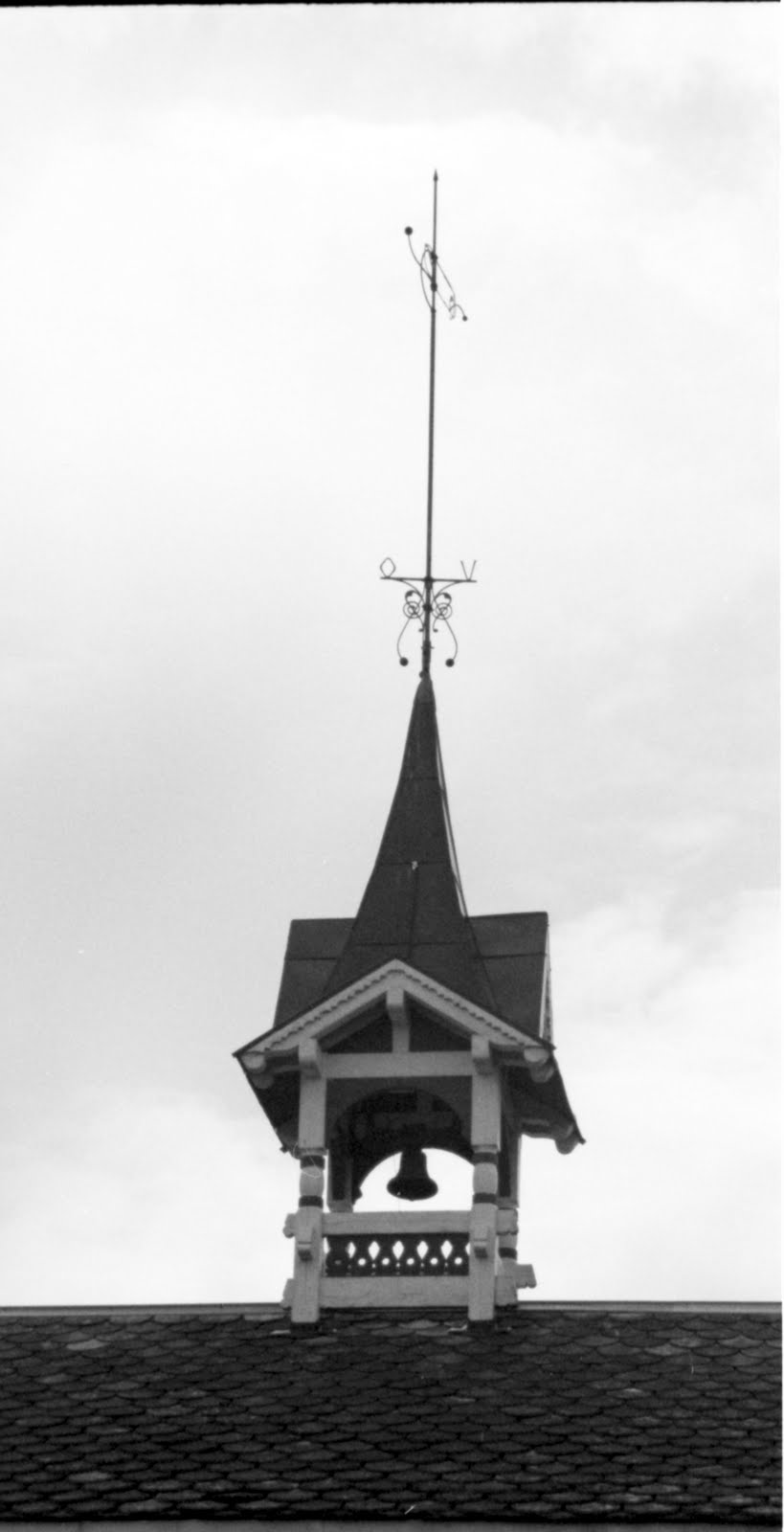
Canon IX APS, Kodak advantix 200
Exposed at 100 ISO, developed at 22 min @ 20C

Canon IX APS, Kodak advantix 200
Exposed at 100 ISO, developed at 22 min @ 20C

Canon IX APS, Kodak advantix 200
Exposed at 200 ISO, developed at 22 min @ 20C

Canon IX APS, Kodak advantix 200
Exposed at 400 ISO, developed at 22 min @ 20C
To me this experiment highlights two things, the TCB-developer, even at this mix gives good ISO, it will allow box speed and it gives finer grain than Cafenol C.
This experiment has been goood, even after a false start. I will adjust the mix procedure and adjust the formula, and will listen carefully to the suggestion from Michael.
Also this experiment underlines that this developer will certainly develop several films with little or no adjustment of developing times, that might indicate that ascorbic acid has been mixed in to saturation, so that this protects and restores the tylenol. The initial troubles was most likely because the tylenol componenet did not react as designed.
At the moment I think this developer survives well in a closed bottle, and that it can be used as a standby developer. It might be needed to adjust times to specific films, most likely ordinaru B&W will require less development time, while the troublesome Fuju's will need more time. Only time will show. I now close this chapter and looks to other things.
*********************************
I just decided to one more roll of APS film, Kodak Advatix (C41) Ultra 400 ISO.
This was the final drops of developer left from this mix, it was just enough to cover the film in the spiral, and I discarded the mix after development, after securing final pH in the mix, at pH 9.5
Since this was a 400 ISO film and it has been my experience that 400 ISO films need a little more time in the brew than 100 - 200 ISO C41 films, I devided to up the time by 25%, adding one extra minute for the developer being spent.
So I ended up with a development time of 28.5 minutes. All in all this looks to be a bit too long, another contribution to that was a slightly higher temperature, up to 21.5 C from the previous 20 C. This also would have added a minute - or rather I should have deducted a minute, perhaps a minute and a half on account of the temperature.
As usual I used 3 changes of tempered water as a stop, and fixed and washed as normally. The negatives came out quite good, perhaps a little too dense, with good contrast. This being a 400 ISO film, and a color C41 film to boot, sharpness wasn't perfect and we can see a lot of grain, also perhaps due to over-development, contrast was a bit steep, and exposure a bit trick for the auto-exposure used in counter-the-light situations. I will not recommend 400 ISO film for general use in APS cameras, too little negative area.
The negative strips of my usual test runs with one exposure box-speed, one under and one over was scanned and left asd is, and can bee seen under here, together with a few single scans that are doctured a bit for contrast and density, as I would normally do.

Canon IX APS, Kodak Advantix 400
Exposed as shown, developed at 28.5 min @ 21.5C, TCB mix
left to right, ISO 400, ISO 800, ISO 200


left to right, ISO 400, ISO 800, ISO 200

Canon IX APS, Kodak Advantix 400
Exposed at ISO 800, developed at 28.5 min @ 21.5C, TCB mix

Canon IX APS, Kodak Advantix 400
Exposed as shown, developed at 28.5 min @ 21.5C, TCB mix
left to right, ISO 400, ISO 800, ISO 200
left to right, ISO 400, ISO 800, ISO 200

Canon IX APS, Kodak Advantix 400
Exposed at ISO 800, developed at 28.5 min @ 21.5C, TCB mix

Canon IX APS, Kodak Advantix 400
Exposed as shown, developed at 28.5 min @ 21.5C, TCB mix
left to right, ISO 400, ISO 800, ISO 200
left to right, ISO 400, ISO 800, ISO 200

Canon IX APS, Kodak Advantix 400
Exposed at ISO 200, developed at 28.5 min @ 21.5C, TCB mix

Canon IX APS, Kodak Advantix 400
Exposed as shown, developed at 28.5 min @ 21.5C, TCB mix
left to right, ISO 400, ISO 800, ISO 200
left to right, ISO 400, ISO 800, ISO 200

Canon IX APS, Kodak Advantix 400
Exposed at ISO 200, developed at 28.5 min @ 21.5C, TCB mix
This cocluded my test run so far with the TCB-developer, it started with a small disaster, since I strongly feel the mixing procedure was incorrect, too little of the Tylenol was initially converted into a super-additive pair of developing agents with the ascorbic acid, this left me with half as much of the mix as I intially did expect.
However the results shown here, after the initial disaster came from part A of the mix only, i.e. half the volume. I have plans for further tests, but with a different mixing procedure, to start the transformation of the tylenol, and the protect the result with ascorbic acid, as suggested by Michael.
So far this developer yelds excellent results, but cannot create magic, as 400 ISO C-41 APS films definitely WILL be grainy like hell, no matter what developer is used. What is promising is that it now seems that normally exposed films will reach 400 ISO from 200 ISO films, and 800 ISO from 400 ISO films, even from this rather weak brew, and do so easily.
I definitely suggest further tests here.
Another positive side is : it took more than 1.5 months between my initial mix and use of this brew and until the last film developed. Even when kept on an half-empty bottle, in a well lit, warm kitchen, in a blank, see-through bottle, little effect and activity was lost, if kept in a cool place, in a stoppered and full bottle and in the dark, this developer should keep used for months easily.
More tests on that is sure to follow, as soon as i have the proper mix down pat.
***********************************************************
Thank you for your valuable input here Michael, without your knowledge and insights and practical experience, I'd be completely lost!
Saturday, June 4, 2011
TCB - Tylenol, Ascorbate, Borax - pictures.
Kodak Gold 200 ISO 200 C41 color-negative film.
Developed in part A ONLY of the TCB developer ph 9.3, 20 centigrade, normal agitation. Time 30 minutes at 20 centigrade, did reach only half box speed
The developer in part A did not react as expected, apparently the initial concentration of NaOH was too low to convert the Tylenol tablets (paracetamol plus additives) into a proper developer, but a fairly high addition of ascorbic acid most likely saved the day, even at a very low pH of 9,3 in this mix.
This brew did not follow the recipe given below, since there at first try was no activity, the dosage of NaOH was doubled in the hope that activity would pick up.
This test was a least straw after the initial and original plan failed, I skipped part B entirely (30 gram Borax per liter) and used only part A for a higher concentration and more activity. Even at that I only got about half box speed.

Triplet stripe from left to right :
ISO 200, ISO 100, ISO 400

ISO 100

Triplet stripe from left to right :
ISO 200, ISO 100, ISO 400

ISO 400

ISO 100

Triplet stripe from left to right :
ISO 200, ISO 100, ISO 400

Kodak Gold 200 exposed ISO 100 developed as above
Back to the drawing board, I will now try to duplicate Michaels recipe exactly, to see if that gives better results.
TCB - Tylenol, Vitamin C and Borax - roundup
I mixed the brew(s) as outlined below, my first try to make this complicated brew easier to understand.
I had a botlle, 500 ml of part A and a bottle, 1000 ml of part B. If mixed straight I would have 1,5 liter of developer on hand. Being a bit insecure of how well this would store (Michael indicated it would keep in a closed bottle, but.....)
The gameplan was to take 100 ml part A & 200 ml part B, for a 300 ml mix in a JOBO-tankful.
I set up everything very accurate, measured temperature exactly, pH with pH-meter that had been zeroed.
The brew was ph 9.3 temperature just above 20 centigrade.
Poured the developer, agitated normally for 12 minutes, just like a normal B&W film in Cafenol CH. Normal stop, normal fix and wash, everything normal so far.
When I pulled the lid, it was a BIG disappointment, absolutely nothing on film!
Couple of days later after some hectic messages from Michael, back and forth, I tentatively added 4 gram of lye pearls (NaOH), to double the NaOH content and get the pH up. The hope was that the lye hadn't converted the Tylenol tablets into developer, a good sign on that was that there was no expected color change in part A, it was light yellowish (not green-yellow from ascorbic acid-conversion), and pH was 8,8 before NaOH added.
I added the lye and let everything sit for a couple of days, hoping the lye would take care of the Tylenol. I then mixed another, similar brew. Now pH was 9,3-ish in both parts and in the mix as well, no real color change in part A.
I mixed a fresh mix of part B, without any KBr in it, if the KBr-restrainer had kept the ascorbate from working.
After 15 minutes development, normal agitation, stop, fix and wash I pulled the lid and had a look at the film.
Another big disappointment. This time there was faint images, but only the extreme highlights had developed at all, like sunlit parts of the sky.
So far nothing to show at all.
After another round of e-mails to & from Michael I gave this some deep thought :
Adding part B in this case did nothing to the pH, and pH 9.3 is borderline for ascorbates annyway it is said, so I figured I needed as concentrated a soup as I could find.
Luckily it sat just in fron of me, the part A bottle still had some 300 ml in it, bottom covered by a slur from the tablets (sugar and other additives to form the tablets, I'm told.
I decided to use that as was, and quickly set up everything with a new test-film, with 12 bracketed triplets filling the entire 36 picture roll.
Gave it 30 minutes development time in the concentrated brew, normal agitation, stop, fix and wash, and pulled the lid.
Finally TCB had given me pictures! I hang it to dry, scanned the results and had a look see on everything.
The film was over-developed. That was easy to see, in each triplet pic\ture #1 was exposed box speed, ISO 200, picture #2 was exposed ISO400, and picture #3 was exposed ISO 100.
Except for against-the light exposers who fooloed the exposure even on my Canon EOS 50e all where overexposed in the development time used here (30 minutes).
In all instances, except for hard against-the-light exposures, ISO 100 was best, the others where a bit touch and go as is to be expected in tricky light.
I scanned the pictures, and did scans of some of the triplets together also, so people can asess themselves what it looks like. I will show pictures in the nest instalment tonite.
The conclusion so far is :
I need to go back to Michaels original recipe and follow to the letter, to see if I can replicate his work.
I also need to find out if this developer will store partly used in a closed but not entirely full bottle.
Sadly I already spent too much on the first experiments, after one film I now have less that a tabnkfull for 35 mm film. But I can develop several APS films in another tank, before I loose too much of the fluid to cover the film, and this I intend to do. I will also cut back on time to ca 20 - 22 minutes and add a minute per film thereafter.
This remains to be done, I'll be back with more on that later, but now - onwards to the next instalment, the pictures from this experiment!
I had a botlle, 500 ml of part A and a bottle, 1000 ml of part B. If mixed straight I would have 1,5 liter of developer on hand. Being a bit insecure of how well this would store (Michael indicated it would keep in a closed bottle, but.....)
The gameplan was to take 100 ml part A & 200 ml part B, for a 300 ml mix in a JOBO-tankful.
I set up everything very accurate, measured temperature exactly, pH with pH-meter that had been zeroed.
The brew was ph 9.3 temperature just above 20 centigrade.
Poured the developer, agitated normally for 12 minutes, just like a normal B&W film in Cafenol CH. Normal stop, normal fix and wash, everything normal so far.
When I pulled the lid, it was a BIG disappointment, absolutely nothing on film!
Couple of days later after some hectic messages from Michael, back and forth, I tentatively added 4 gram of lye pearls (NaOH), to double the NaOH content and get the pH up. The hope was that the lye hadn't converted the Tylenol tablets into developer, a good sign on that was that there was no expected color change in part A, it was light yellowish (not green-yellow from ascorbic acid-conversion), and pH was 8,8 before NaOH added.
I added the lye and let everything sit for a couple of days, hoping the lye would take care of the Tylenol. I then mixed another, similar brew. Now pH was 9,3-ish in both parts and in the mix as well, no real color change in part A.
I mixed a fresh mix of part B, without any KBr in it, if the KBr-restrainer had kept the ascorbate from working.
After 15 minutes development, normal agitation, stop, fix and wash I pulled the lid and had a look at the film.
Another big disappointment. This time there was faint images, but only the extreme highlights had developed at all, like sunlit parts of the sky.
So far nothing to show at all.
After another round of e-mails to & from Michael I gave this some deep thought :
Adding part B in this case did nothing to the pH, and pH 9.3 is borderline for ascorbates annyway it is said, so I figured I needed as concentrated a soup as I could find.
Luckily it sat just in fron of me, the part A bottle still had some 300 ml in it, bottom covered by a slur from the tablets (sugar and other additives to form the tablets, I'm told.
I decided to use that as was, and quickly set up everything with a new test-film, with 12 bracketed triplets filling the entire 36 picture roll.
Gave it 30 minutes development time in the concentrated brew, normal agitation, stop, fix and wash, and pulled the lid.
Finally TCB had given me pictures! I hang it to dry, scanned the results and had a look see on everything.
The film was over-developed. That was easy to see, in each triplet pic\ture #1 was exposed box speed, ISO 200, picture #2 was exposed ISO400, and picture #3 was exposed ISO 100.
Except for against-the light exposers who fooloed the exposure even on my Canon EOS 50e all where overexposed in the development time used here (30 minutes).
In all instances, except for hard against-the-light exposures, ISO 100 was best, the others where a bit touch and go as is to be expected in tricky light.
I scanned the pictures, and did scans of some of the triplets together also, so people can asess themselves what it looks like. I will show pictures in the nest instalment tonite.
The conclusion so far is :
I need to go back to Michaels original recipe and follow to the letter, to see if I can replicate his work.
I also need to find out if this developer will store partly used in a closed but not entirely full bottle.
Sadly I already spent too much on the first experiments, after one film I now have less that a tabnkfull for 35 mm film. But I can develop several APS films in another tank, before I loose too much of the fluid to cover the film, and this I intend to do. I will also cut back on time to ca 20 - 22 minutes and add a minute per film thereafter.
This remains to be done, I'll be back with more on that later, but now - onwards to the next instalment, the pictures from this experiment!
Tuesday, May 24, 2011
TCB - Tylenol, Vitamin C and Borax - mixed and ready to go
I finalized my mix, part A and part B, and are ready to go, I have one film ready to be developed and several in camera, ready to meet their destiny.
I took the opportunity to measure pH as I went along and mixed the ingredients, hopefully this can give Michael and me a better insight and what actions to take, as soon as (if) I meet with failure.
I changed a few bits as I went along, but only practical things that should not matte over all.
here goes:
Part A
Started with 75 ml room temperature water.
Added 2 gram Sodium bicarbonate (Natron) ....................... pH 8.0
Added 6 gram Ascorbic acid (fizzled, slight green mix) ...... pH 4.4
Added 4 gram Tylenol (paracetamol, Paracet) crushed ....... no measurement
Added water to 100 ml ......................................................... no measurement
Added 4 gram Lye (Caustic soda, NaOH) ........................... pH 11.9
Let this stand for 72 hours, there was slurry on the bottom from tylenol-tablet ingredients, this did not dissolve unlike my SALS13 experiment (stronger lye concentration, more fluid....), and the color remained a turbid yellow, unlike my SALS13 experiment where the tylenol mix turned wine-red and even dark brown red. I take this as a sign that the sodium bicarbonate and ascorbic acid worked in unison to protect the tylenol from oxidizing entirely and be spent in soliution before being used at all.
The 100ml tylenol mix was the used to make Part A :
Tylenol mix 100ml ........................................ pH 11.9
Water to 425ml
Added ascorbic acid 10 gram ....................... pH 8.5
Added Borax 20 gram ..................................
Water to 500 ml ............................................ pH 8.8
part A ios now ready for use with a pH around 8.8
Part B :
Water temepered 600 ml
Added 15 ml KBr 10% mix, for 1,5 gram
Added Borax 30 gram this was har to dissolve, so I heated in a water bath.
Added water to 1000 ml stirred well and heated ..............pH 9.3
part B is now ready for use after temperature comes down
I have two parts, pH 8.8 and 9.3 respectively. I expect the resulting pH will be around pH 9.1 after mixing.
I will mix up a solution of 1 part A and 2 parts B and store it in a bottle, planning to use that like ordinary, undiluted D76 for at least 6 films
The remainder will first be mixed 1 part a and 2 parts B and used as a single use developer, I will try that first to get a feel for this.
Planning to start with a Kodak Gold 200, exposed 1, -1 and + 1 for 12 images worth on a 36 exp film, and compare this to the similarly exposed Gold 200 that I did last night in Cafenol CM, the 5 film in a brew of 500 ml.
The objective here is both to find out if this developer is suited to repeated use, ore one-shot use, and wether it gives full box speed. Lots of work ahead. (need to find time after a local football match to upload pictures from the last 5 films developed in the cafenol-brew, but football gets the priority - a good source for more pictures!)
I took the opportunity to measure pH as I went along and mixed the ingredients, hopefully this can give Michael and me a better insight and what actions to take, as soon as (if) I meet with failure.
I changed a few bits as I went along, but only practical things that should not matte over all.
here goes:
Part A
Started with 75 ml room temperature water.
Added 2 gram Sodium bicarbonate (Natron) ....................... pH 8.0
Added 6 gram Ascorbic acid (fizzled, slight green mix) ...... pH 4.4
Added 4 gram Tylenol (paracetamol, Paracet) crushed ....... no measurement
Added water to 100 ml ......................................................... no measurement
Added 4 gram Lye (Caustic soda, NaOH) ........................... pH 11.9
Let this stand for 72 hours, there was slurry on the bottom from tylenol-tablet ingredients, this did not dissolve unlike my SALS13 experiment (stronger lye concentration, more fluid....), and the color remained a turbid yellow, unlike my SALS13 experiment where the tylenol mix turned wine-red and even dark brown red. I take this as a sign that the sodium bicarbonate and ascorbic acid worked in unison to protect the tylenol from oxidizing entirely and be spent in soliution before being used at all.
The 100ml tylenol mix was the used to make Part A :
Tylenol mix 100ml ........................................ pH 11.9
Water to 425ml
Added ascorbic acid 10 gram ....................... pH 8.5
Added Borax 20 gram ..................................
Water to 500 ml ............................................ pH 8.8
part A ios now ready for use with a pH around 8.8
Part B :
Water temepered 600 ml
Added 15 ml KBr 10% mix, for 1,5 gram
Added Borax 30 gram this was har to dissolve, so I heated in a water bath.
Added water to 1000 ml stirred well and heated ..............pH 9.3
part B is now ready for use after temperature comes down
I have two parts, pH 8.8 and 9.3 respectively. I expect the resulting pH will be around pH 9.1 after mixing.
I will mix up a solution of 1 part A and 2 parts B and store it in a bottle, planning to use that like ordinary, undiluted D76 for at least 6 films
The remainder will first be mixed 1 part a and 2 parts B and used as a single use developer, I will try that first to get a feel for this.
Planning to start with a Kodak Gold 200, exposed 1, -1 and + 1 for 12 images worth on a 36 exp film, and compare this to the similarly exposed Gold 200 that I did last night in Cafenol CM, the 5 film in a brew of 500 ml.
The objective here is both to find out if this developer is suited to repeated use, ore one-shot use, and wether it gives full box speed. Lots of work ahead. (need to find time after a local football match to upload pictures from the last 5 films developed in the cafenol-brew, but football gets the priority - a good source for more pictures!)
Monday, May 23, 2011
Cafenol as a staining developer?
A lot has been written about the staining qualities of cafenol. Like much of what has been written some of it is true, some is exaggerated and some is plain BS.
A while back a gentleman asked if Cafenol would stain his developing tanks. This was kind of a surprise, and the answers he got was more of a surprise. I have watched out for stains from Cafenol since day one, and this is my take on the situation.
- Cafenol contains massive amounts of washing soda. In itself this is a very strong cleaning agent, back in the day this was what my grandmother used to get rid of nasty stuff from cleaning out fish - she came from a fishing village on a small island. Only stronger stuff she ever used was lye - but then only in emergencies!
Since we have concentrated soda in the mix, borth organic and inorganict matter will be dissolved and lifted into solution, given time and repeated exposure.
The relative small amount of coffe, containing caffeine and caffeic acid, among a mix off other stuff is said to have staining abilities. So will the coffe stain the plastics in developing tanks, or will the soda negate this?
The coffee component will stain photograpic film - to some degree. I have noticed this effect stronger in color films than in B&W films (which is what can be expected), Cafenol will develop most C41 color films jkust like most B&W films.
Recent experiments with Fomapan and Lucky 100 B&W films in Cafenol C-H did not show staining to any degree, straight scans came out nearli pitch dark in the shadows and clear in the hight-lights, the same for TriX, even if my TriX was more than 35 years old and did show considerable chemical fog, it scanned perfectly, however.
And older test with coffe & soda alone, sans vitamine C did show markedly higher stain levels - this probably was connected with the fact that development times had to be increased (doubled) and concentration of the coffe doubled or tripled, because coffe is such a weak developing agent on its own...
Staining in the film works differently from staining of plastics: coffe gets sucked up into the gelatine layer and stains whats inside THERE, personally I think this has to do whith gelatine, more than anything else.
When it comes to developing tanks, few pause and think through what is at hand here.
Developing tanks are made from what is to be stain-free plastics. However we all know and have seen old spirals blackened from developer.... So what exactly causes that?
There are very few modern-day staining developers, in earlier days, and among a few enthisiasts, amidol-based developers are noted for staining qualities. Cafenol is nothing like that.
Besides more than 90% of the stains seen on developing tanks stems from quite another mechanism than the developer :
The stains comes from the fixer. To the casual observer the fixer does one thing: dissolves unexposed, undeveloped silver-halides. Few knows that the exact mechanism that this takes plave varies wildly with both concentration and the dissolved silver in the fixer solution.
Again I have to direct interested partied to my german-language tome :
"Wissenshaftliche und Agewante photographie" von Edwin Mutter, Springer Verlag 1955, page 181.
Fixation takes place in four discrete steps, the first two leaves insolulble silver-sulphur complexes in solution, but as long as the silver concentration is low, and the fresh hypo-concentration is high, the fixing process runs to completion for two more steps and leaves soluble silver salts in solution. This is what normally takes place as long as the fixer is not exhausted.
If we work with exhasuted fixer, this process doesn not run completely or very slowly, leaving us with fixer stains.
This is what we find in developing tanks, its got nothing to do with the developer.
Alswo sloppy procedures, to little washing and not properly cleaning the tanks will give rise to such stains, with a little bit different mechanism : if we leave fixer on tank parts, they will of course dry out. As the fix droplets dries, concentration changes in them, if there's enough silver in there, the silver concentration will outrun the hypo concentration, and silver-sulphur complexes will fall out and stain the surface.
This can be seen as brown fingerprints, where spirals, lids etc have been handled with fixer-stained fingers.
IF WE START USING CAFENOL IN STAINED TANKS LIKE THIS, CAFENOL WILL DISSOLVE THE SILVER-SULPHUR HALIDES, SLOWLY WITH TIME AND REMOVE THEM!
THis was brought home to me by 3 Jobo 1000 tanks I got used on €-bight. Theu all came well used, with one or two stained spirals and 3 stained lids. The word JOBO was written in black, from silver fixer stains.
Now after continued use as cafenol-tanks for more than a year, and well used as that might I add, all of the brown-black stains on the lidsa have disappeared, caffenol has cleaned them, I never tried to do anything special, just used them as normal and washed meticously as I always do with films.
The spirals are much cleared too, but difference in the plastic used (more transparent and brittle than the flexible lids) probably makes for this to take a considerable time to clear.
Finishing off : You can safely develop all kind of films in Cafenol, the tanks are designed for it, and high concentration of a strong detergent in the deeveloper, washing soda will clear smudges and stains from previous use.
Good luck.
A while back a gentleman asked if Cafenol would stain his developing tanks. This was kind of a surprise, and the answers he got was more of a surprise. I have watched out for stains from Cafenol since day one, and this is my take on the situation.
- Cafenol contains massive amounts of washing soda. In itself this is a very strong cleaning agent, back in the day this was what my grandmother used to get rid of nasty stuff from cleaning out fish - she came from a fishing village on a small island. Only stronger stuff she ever used was lye - but then only in emergencies!
Since we have concentrated soda in the mix, borth organic and inorganict matter will be dissolved and lifted into solution, given time and repeated exposure.
The relative small amount of coffe, containing caffeine and caffeic acid, among a mix off other stuff is said to have staining abilities. So will the coffe stain the plastics in developing tanks, or will the soda negate this?
The coffee component will stain photograpic film - to some degree. I have noticed this effect stronger in color films than in B&W films (which is what can be expected), Cafenol will develop most C41 color films jkust like most B&W films.
Recent experiments with Fomapan and Lucky 100 B&W films in Cafenol C-H did not show staining to any degree, straight scans came out nearli pitch dark in the shadows and clear in the hight-lights, the same for TriX, even if my TriX was more than 35 years old and did show considerable chemical fog, it scanned perfectly, however.
And older test with coffe & soda alone, sans vitamine C did show markedly higher stain levels - this probably was connected with the fact that development times had to be increased (doubled) and concentration of the coffe doubled or tripled, because coffe is such a weak developing agent on its own...
Staining in the film works differently from staining of plastics: coffe gets sucked up into the gelatine layer and stains whats inside THERE, personally I think this has to do whith gelatine, more than anything else.
When it comes to developing tanks, few pause and think through what is at hand here.
Developing tanks are made from what is to be stain-free plastics. However we all know and have seen old spirals blackened from developer.... So what exactly causes that?
There are very few modern-day staining developers, in earlier days, and among a few enthisiasts, amidol-based developers are noted for staining qualities. Cafenol is nothing like that.
Besides more than 90% of the stains seen on developing tanks stems from quite another mechanism than the developer :
The stains comes from the fixer. To the casual observer the fixer does one thing: dissolves unexposed, undeveloped silver-halides. Few knows that the exact mechanism that this takes plave varies wildly with both concentration and the dissolved silver in the fixer solution.
Again I have to direct interested partied to my german-language tome :
"Wissenshaftliche und Agewante photographie" von Edwin Mutter, Springer Verlag 1955, page 181.
Fixation takes place in four discrete steps, the first two leaves insolulble silver-sulphur complexes in solution, but as long as the silver concentration is low, and the fresh hypo-concentration is high, the fixing process runs to completion for two more steps and leaves soluble silver salts in solution. This is what normally takes place as long as the fixer is not exhausted.
If we work with exhasuted fixer, this process doesn not run completely or very slowly, leaving us with fixer stains.
This is what we find in developing tanks, its got nothing to do with the developer.
Alswo sloppy procedures, to little washing and not properly cleaning the tanks will give rise to such stains, with a little bit different mechanism : if we leave fixer on tank parts, they will of course dry out. As the fix droplets dries, concentration changes in them, if there's enough silver in there, the silver concentration will outrun the hypo concentration, and silver-sulphur complexes will fall out and stain the surface.
This can be seen as brown fingerprints, where spirals, lids etc have been handled with fixer-stained fingers.
IF WE START USING CAFENOL IN STAINED TANKS LIKE THIS, CAFENOL WILL DISSOLVE THE SILVER-SULPHUR HALIDES, SLOWLY WITH TIME AND REMOVE THEM!
THis was brought home to me by 3 Jobo 1000 tanks I got used on €-bight. Theu all came well used, with one or two stained spirals and 3 stained lids. The word JOBO was written in black, from silver fixer stains.
Now after continued use as cafenol-tanks for more than a year, and well used as that might I add, all of the brown-black stains on the lidsa have disappeared, caffenol has cleaned them, I never tried to do anything special, just used them as normal and washed meticously as I always do with films.
The spirals are much cleared too, but difference in the plastic used (more transparent and brittle than the flexible lids) probably makes for this to take a considerable time to clear.
Finishing off : You can safely develop all kind of films in Cafenol, the tanks are designed for it, and high concentration of a strong detergent in the deeveloper, washing soda will clear smudges and stains from previous use.
Good luck.
Tuesday, May 17, 2011
TCB - Tylenol, Vitamin C and Borax revamped.
Michel published a version of this, early on when he joined the team here.
I was most interested, but had no access to borax at the time
(my secret stash of borax, utilized when I took class with one of the country's top blacksmiths, learning how to make knife-blades in the 1000 year old tradition from viking ages simply had vanished. Borax is used in blade-smithing to protect the steel and iron from oxygen and faciliate removal of scales, we vikings make blades in a 3-layer process, fuzing two layers of iron to one layer of hardening steel in the middle, giving rize to a hard, sharp edge, protected by two layers of nonharedned iron, som the blade is flexible and durable).
I finally got hold of a 1000 gram box, and is ready to give this a spin, while I'm waithing for my box of phenidone to show up.
Looking over Michel's recipe, I still find it too hard to understandt to be popular. I feel we need to make it simpler, while keeping to good bits.
I ahve a set of objerctives here :
I was most interested, but had no access to borax at the time
(my secret stash of borax, utilized when I took class with one of the country's top blacksmiths, learning how to make knife-blades in the 1000 year old tradition from viking ages simply had vanished. Borax is used in blade-smithing to protect the steel and iron from oxygen and faciliate removal of scales, we vikings make blades in a 3-layer process, fuzing two layers of iron to one layer of hardening steel in the middle, giving rize to a hard, sharp edge, protected by two layers of nonharedned iron, som the blade is flexible and durable).
I finally got hold of a 1000 gram box, and is ready to give this a spin, while I'm waithing for my box of phenidone to show up.
Looking over Michel's recipe, I still find it too hard to understandt to be popular. I feel we need to make it simpler, while keeping to good bits.
I ahve a set of objerctives here :
- I want to get rid of coffe entirely, as its the least understood and controllabel ingredient.
- I want to use as many easy-to-get ingredients as possible, since everyone can seet that commercial suppliers are fast vinishing.
- I want to refine MM's recipe, so that anyone can follow this easily.
Discussing the original recipe.
Have a look at MM's instalment back in march, "tylenol and ascorbate - it works!"
There he gives his formula and explanation. My gut-feeling at the time was that this was too imnvolved, too hard to do, and too hard to copy, even for mee, with a chemistry background and many years of labor in a laboratory in my earlier days.
So I set myself the task to refine it, while keeping all the good parts, I still think this has great potential, even if it was placed on the backburner at the time by other and more pressing stuff.
Hopefully Michael will take part in this and offer his advice, currently I've seen few if any with a deeper understanding of Patric Gainer's writings....
Looing at the original recipe for TCB a few things strikes me :
- The idea of mixing ascorbic acid with sodium bicarbonate FIRST, then adding tylenol, to protect the tylenol from unwanted oxidation is very good, I thnk that was what sunk my SALS project.
- The idea of using a little NaOH (0.2M) to convert the Tylenol is splendid.
- ph is lowered at a later stage by adding massive amounts of Borax, this gives longer, more controllable development times: good idea.
However there are flies in the ointment :
In the description unnecessary uncertainity rises because we talk of several things in a disorderly fashion :
- we talk about borax saturate solution
- we talk about tylenol solution
- we talk about part A, part B
- what we need is a simple, easy to follow recipe, much like when my grandma baked bread, and passed her secrets on to my mother, my wife and ultimately me....
I will try to correct this and offer a simple, easy to follow recipe, with development times advice and later examples of work done with this. The rules are simple :
- the chemicals shall be easy to get, everday chemicals, save for one, borax.
- the result will be two simple storage bottles, the chemicals used in a mix-before-use and discard fashion.
- we use realively little of the expensive chemicals, so this will be a cheap developer to use
- we offer an easy explanation on how to do this, so that anyone can do it
Recipes
We start by mixing part A, then mix part B. Part A needs a little time to finish, in involves a few chemical reactions to take place, this needs time to be controllable and reliable. Therefore we start with part A a few days before we need it. Part B can be mixed the day its needed.
We offer a balanced mix, so that when part A is spent, so is part B, simple and easy to understand.
The objective of part B is mainly to dilute part A, to control fogging and make the developer controllable as far as times goes. A short development time will mean that differences in pour times, might give uneven results from time to time. 15 seconds in and 15 seconds out means more if the time is 5 minutes vs 15 minutes..... if one has a very old develoing tank, like me, I have many and uses many, in-out times easily can reach close to a minute altogether.
Part A is mixed with part B: 1 part A, 2 parts B.
I have lowered the initial concentration for longer development times, from Michels 7 minutes with TriX to about 10 - 11 minutes with TriX, and 14 - 16 minutes with C41 films.
Caution! These recipes involves working with lye, NaOH at a strong concentration.
Lye is a very dangerous substance, be extremely cautios using this, wear safety glasses, the concentration will initially be 1 molar, which will take out the eyesight in minutes, if one is unlucky. Also when mixing out lye add just alittle at a time, wix well, and most importantly stand thw mixing bottle in a container of as cold water as possible and have more cooling water AT HAND. If this boils, and fumes are expelled, leave the area immediately, this is very toxic, and make sure the area is ventilated before returning, and discard the boiled stuff after diluting it at least 1:10 with cold water.
Part A
Water ........................ 75 ml
Sodium bicarbonate ............. 2 gram
Ascorbic Acid ................... 6 gram
Tylenol tablets tbl @500 mg 4 gram
Water ..................... fill to 100 ml
NaOH, lye pearls ................ 4 gram
Add the ingredients in the exact order given - there will be two distict chemical reactions, give time for them to take place.
Sodium bicarbonate should dissolve easily, ascrobic acid bubbles and gives microbubbles in solution, let this clear.
Tylenol tablets need to be crushed and dissolved, it reacts with the lye thats added after, and will give a vine-red solution, the idea here is that ascorbic acid protects the tylenol, so its not all oxidised by air (ascorbates will continue to protect the tylenol in solution).
For this reaction to complete, this solution needs to stand in a well closed bottle, as little air in it as possible, preferably in a cool, dark place, for 48 to 72 hours. After this the part A is finished with further additives given below.
Part A finished :
Preliminary mix ......................... 100 ml
Water .......................... to 300 ml
Ascorbic acid ........................ 10 gram
Borax ................................. 20 gram
Water ............................ to 500 ml
Part A is now finished and can be used as soon as it is tempered to 20 centigrade.
More ascorbic acid was added to give a 1:4 ratio between ascorbate and tylenol, give time for this to react - both the lye and the borax will convert the ascorbic acid. Borax dissolves slowly and is close to saturation here, if the mix temeperature is too low it might not all dissolve.
This the finished Part A, ready to be diluted for use with Part B.
Part B
Water ..................................... 500 ml
Potassium bromide (KBr) ..... 1.5 gram
Borax ................................... 20 gram
Water ........................... to 1000 ml
The potassium bromide control chemical fogging, less will give a more active developler and shorter development times, but possibly fog. more works the opposite.
Borax con trol the pH in the mix, countering the lye in part A, keeping fogging at bay, controlling time.
Part B is finished and can be used at 20 centigrade.
In use.
In use :
Single-shot use. This is what Michael suggested, as I understand him (!) but since concentration is a bit lower, we must adjust the times.
Mix 1 part A with 2 parts B use one time, discard the used developer.
This mixture will be enough for 1,5 litre developer, or enough for 5 films at 300 ml per tank, constant development times. Since we use 16 grams of vitamine C and 4 grams of Tylenol, divide that with 5 and ascertain we are (still) frugal!
Times : (still experimental, based on Micheals suggestions and plain guesstimates)
B/W film 100 - 200 ISO 11 - 13 minutes at 20 centigrade
B/W film 400 ISO and above 15 - 18 minutes at 20 centigrade
C41 colorfilms, developed to B/W 15 - 16 minutes at 20 centigrade
All times will be subject to cange with temperature.
All times based on staandard agitation regime, make sure the film is entirely covered by fluid!
All times based on no form of pre-wetting the film, I do NOT advocate pre-wetting of films!
Agitation regime:
Constant agitation (slow turns or slow rotation) fo theirs 3t 60 seonds.
Thereafter 3 to 4 slow turns once every minute for the duration of time.
I have no advice on stand development.
To be researched :
These solutions should keep well. One of the most interesting bits is to find out wether this developer can be mixed all up and stored like ordinary D76.
If that is possible, it could be used like D76, to develop ca 10 - 12 films from one bottle, its easy to find out, comparing with Cofenol CCM, that we throw out ca 50% of the ascorbates here.....
If that is possible, if this developer will keep in a closed bottle, semi- or half-used like D76, we simly adjust developing times like this:
1. film 12 minutes
2. film 12 x 1.06 = 12:45 min
3 film 12 x 1.12 = 13:30 min
i.e. keep adding 6% time from start-time per film developed.
To takew this one notch further, compared to D76, 1:1 development.
D76 can be used as a one-shot developer, by diluting 1:1 with water, doubling development times.
If this developer keeps ready-mixed in a bottle, diluted 1:1 with double dev. times as a startpoint should be investigated.
WQhile waiting for my phenidone, this waht I'll be looking into.
Subscribe to:
Posts (Atom)